ASUS Ascent GX10 benchmarks
The ASUS Ascent GX10 runs at the same speed as every other GB10 machine: in StorageReview’s hour-long vLLM test it served GPT-OSS-120B at about 2,700 tok/s, within 2.6% of four other makers. On the GB10, GPUwerk measured Qwen3-Coder 30B-A3B at 80.9 tok/s and Llama 3.3 70B at 6.0 tok/s for a single request (vLLM 0.27.1, AWQ 4-bit, 2 September 2026, raw logs below). This page shows the full set of GB10 results first, then what is specific to the GX10: compute, temperatures and its firmware.
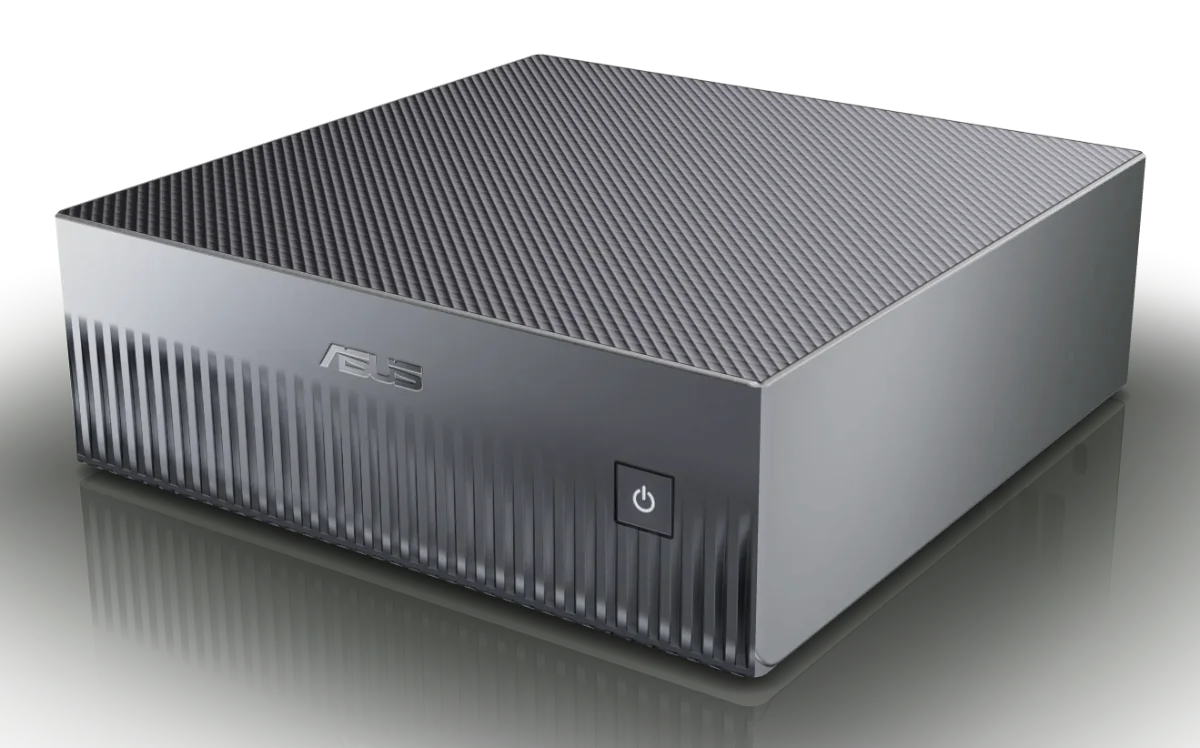
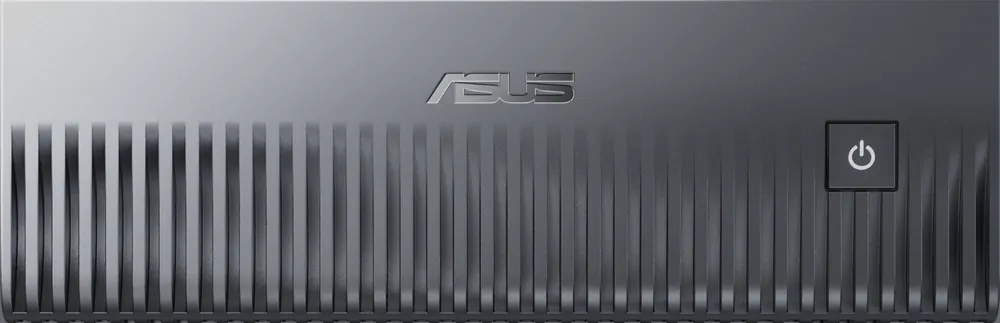
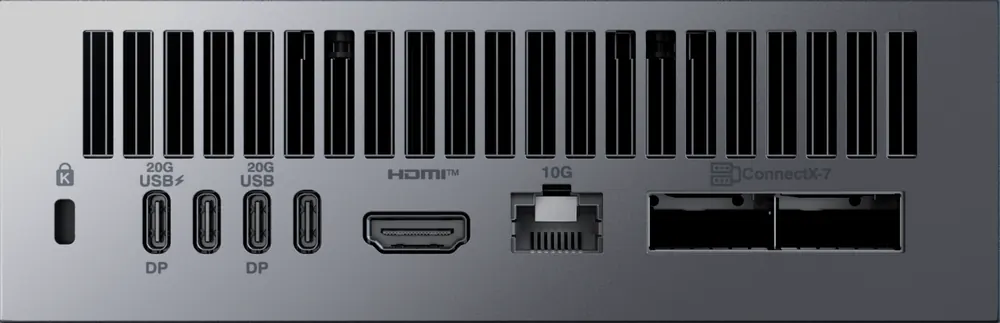
| Qwen3-Coder 30B-A3B, one request | 80.9 tok/sGPUwerk-measured on a GB10 (PGX), 2 Sep 2026, log |
|---|---|
| Llama 3.3 70B, one request | 6.0 tok/sGPUwerk-measured on a GB10 (PGX), 2 Sep 2026, log |
| GPT-OSS-120B, vLLM, batch 64 | about 2,700 tok/s prefill-heavyStorageReview on a GX10, Mar 2026 |
| Gap to other GB10 makers | within 2.6%StorageReview, five makers, 2026 |
| FP4 compute, sparse | 994.8 TFLOPSNVIDIA forum, Jun 2026 |
| BF16, healthy unit | 88.8–93.7 TFLOPSNVIDIA forum, Oct 2026 |
| BF16, unit stuck in low power | 42.5 TFLOPS at 851 MHzNVIDIA forum, Oct 2026 |
Labels follow the benchmark methodology. “GPUwerk-measured” means our machine, our run and a linked log. “Reported” means someone else’s figure, named in the sentence, that we have not reproduced.
Every GB10 machine runs at the same speed
The ASUS Ascent GX10 has the same NVIDIA GB10 chip as every other GB10 machine, with 128 GB of LPDDR5X at 273 GB/s. Tests that ran several makers’ machines on one workload found no gap larger than run-to-run variation. StorageReview served GPT-OSS-120B with vLLM for an hour on five of them:
| Machine | Prefill-heavy, batch 64 | Decode-heavy, batch 64 | Review date |
|---|---|---|---|
| ASUS Ascent GX10 | about 2,700 tok/s | about 260 tok/s | 2026-03-03 |
| Dell Pro Max with GB10 | 2,707.15 tok/s | 273.54 tok/s | 2026-03-03 |
| Acer Veriton GN100 | 2,777.56 tok/s | 292.41 tok/s | 2026-03-03 |
| Gigabyte AI TOP ATOM | 2,771.38 tok/s | 299.41 tok/s | 2026-03-03 |
| HP ZGX Nano G1n | 2,773.3 tok/s | 262.9 tok/s | 2026-04-24 |
Reported by StorageReview, one unit each. The ASUS review gives rounded figures, hence “about”. The decode-heavy order does not follow temperature: the hottest machine posted the highest figure.
The prefill-heavy column spans 2.6%. Other tools agree: nvfp4bench put four makers’ units within 3.5% on FP4 compute (NVIDIA forum, June 2026), and single-stream llama.cpp decode on gpt-oss-120b was 57.19 tok/s on a GX10 (llama.cpp discussion) against 58.72 in the maintainers’ DGX Spark results, on different builds. So the GB10 results below are the GX10’s results, whichever GB10 machine they were measured on, and each says which. The sustained performance by maker guide has the full comparison.
GB10 results measured by GPUwerk
We ran vllm bench serve against vLLM 0.27.1 on one GB10 machine in our own fleet, a Lenovo ThinkStation PGX (thinkstationpgx-e7fe in the logs), with nothing else on its GPU, on 2 September 2026. Both models were AWQ 4-bit.
| Requests | Qwen3-Coder 30B-A3B | Llama 3.3 70B | ||
|---|---|---|---|---|
| Total tok/s | Per request | Total tok/s | Per request | |
| 1 | 80.9 | 80.9 | 6.0 | 6.0 |
| 8 | 845 | 35.2 | 125 | 5.2 |
| 32 | 1,679 | 18.4 | 298 | 3.9 |
| 64 | 2,421 | 13.1 | 466 | 2.8 |
| 128 | 3,010 | 8.2 | 485 (peak) | 1.4 |
| 256 | 3,235 (peak) | 4.5 | 300 | 0.4 |
Total is tokens per second across all requests; per request is each request’s decode speed. Concurrency 1 is a separate run of 8 requests, 128 tokens in and 512 out, and shows generated tokens per second. The other rows are 512 tokens in, 256 out, three requests per concurrency slot, and show vLLM’s total token throughput, which counts prompt and generated tokens together. Generated tokens alone are a third of that figure in these runs: 1,078 tok/s for the 30B at 256 and 162 tok/s for the 70B at 128, per the logs. Zero failed requests at every level. Raw logs: Qwen3-Coder · Llama 3.3 70B.
A mixture-of-experts model with about 3B active parameters is a comfortable chat model on any GB10 machine and keeps scaling to a few hundred concurrent requests. A dense 70B model is a batch model: 6.0 tok/s for one person, and past 128 concurrent requests its throughput falls. Prefill on an 8,192-token prompt was 5,705 tok/s for the 30B and 391 tok/s for the 70B. All of this comes from the GB10’s memory bandwidth, which the one-line formula turns into a prediction for any model.
Two GB10 machines linked
On 12 November 2026 we rented a GPUwerk Spark Cluster 2x through the console, two GB10 machines on one ConnectX-7 cable, partner-hosted in the United States, and served Qwen3-32B-AWQ with vLLM 0.33.0 on one node and across both with tensor parallelism (raw output).
| Requests (prompts) | Generated tok/s | Speed-up | One → two Sparks | ||
|---|---|---|---|---|---|
| One Spark | Two Sparks | Median TTFT | Mean TPOT | ||
| 1 (8) | 11.47 | 20.10 | 1.75× (advantage) | 1,187 → 687 ms | 82.8 → 47.3 ms |
| 4 (16) | 42.12 | 70.65 | 1.68× | 813 → 531 ms | 88.3 → 52.7 ms |
| 16 (64) | 101.32 | 164.84 | 1.63× | 7,059 → 3,952 ms | 133.2 → 83.1 ms |
Generated tok/s is vLLM’s output token throughput, which counts generated tokens only. TTFT is time to first token; TPOT is time per output token after the first. Speed-up is TP=2 generated tok/s divided by TP=1. KV cache: 338,112 tokens on one node, 731,392 tokens across two. Each row is one run.
Setup, commands and the measured link speed are on the DGX Spark benchmarks page. ASUS says two GX10 units connect by QSFP cable through ConnectX-7, and four or more through a switch.
GB10 results by model, reported
Other people’s single-machine figures for models that fit in 128 GB, on any GB10 machine, labelled with engine, format and date. Decode is single-stream unless the concurrency column says otherwise. They apply to the GX10 the same way.
| Model | Format | Engine | Decode tok/s | Prefill tok/s | Concurrency | Source | Date |
|---|---|---|---|---|---|---|---|
| gpt-oss-120b | MXFP4 | llama.cpp build 7941 | 58.7 | 2,444 | 1 | llama.cpp DGX Spark results | 2026-02-05 |
| gpt-oss-120b | 4-bit | vLLM 0.26.1 nightly, forum harness | 60.7 (advantage) | TTFT 131 ms | 1 (116 to 153 aggregate at 8) | NVIDIA forum | 2026-08-10 |
| gpt-oss-120b | MXFP4 | vLLM 26.03 container | 33.5 | not reported | 1 (862.8 aggregate at 256) | Dendro Logic | 2026-04-22 |
| Qwen3-Coder-Next | 4-bit | vLLM 0.26.1 nightly | 74.8 | TTFT 104 ms | 1 (289.0 aggregate at 8) | NVIDIA forum | 2026-08-10 |
| Qwen3-30B-A3B | 4-bit | vLLM 0.26.1 nightly | 77.1 | not reported | 1 (313.4 aggregate at 8) | NVIDIA forum | 2026-08-10 |
| Qwen3.6-35B-A3B | NVFP4, MTP draft 3, FP8 KV | vLLM, eugr build 1ea84d74b | 86.3 at 4k fill (78.8 at 50k, 31.5 at 100k) (advantage) | not reported | not stated | SparkBench | 2026-08-04 |
| Qwen3.6-35B-A3B | NVFP4, 256k context | not stated | 81 | not reported | 1 | noze, citing MiaAI-Lab | 2026-08-06 |
| Qwen3.6-35B-A3B | NVFP4, Unsloth recipe with speculative decoding, 256k context | not stated | ~106 | not reported | 1 | openclawdc (compiled) | 2026-08-05 |
| Gemma-4-26B-A4B + MTP | NVFP4 | vLLM 0.26.1 nightly | 54.9 | TTFT 94 ms | 1 (303.6 aggregate at 8) | NVIDIA forum | 2026-08-10 |
| Gemma 4 26B-A4B | NVFP4 | vLLM 0.19 | 52 | TTFT 53 ms | 1 | ai-muninn | 2026-04-05, updated 2026-06-21 |
| Qwen3.8-27B (dense) | FP8 / NVFP4 | vLLM 0.27.1 | ~104 (FP8) / ~134 (NVFP4) aggregate | not reported | 16, 1k tokens in, 1k out | NVIDIA forum | 2026-08-15 |
| Nemotron-3-Super-120B-A12B | NVFP4 | vLLM cu130-nightly | 22.7 to 23.7 | ~1,900 | 1 (--max-num-seqs 4) | vLLM project writeup | 2026-06-01 |
| Nemotron-3-Super-120B-A12B | NVFP4 | vLLM with CUTLASS K=64 fix | ~24 (about 12 before) | not reported | 1 | NVIDIA forum PSA thread | 2026-03-29 |
| Nemotron Super 49B v1.5 (dense) | NVFP4 | vLLM 26.03 container | 5.79 | not reported | 1 (695.1 aggregate at 256) | Dendro Logic | 2026-04-22 |
| Mistral Small 4 119B | NVFP4 | vLLM 0.21 | 28.76 to 30 | not reported | 1 (74.44 aggregate at 4) | NVIDIA forum | thread posts Mar to May 2026 |
| GLM-5.3-Flash (320B-A18B) | UD-Q2_K_XL, 108.72 GB | llama.cpp | 15.4 prose / 23.6 code | not reported | 1 | ai-muninn | 2026-08-30 |
| DeepSeek-V4-Flash-0731, one Spark | 2-bit expert planes + FP4 tier | vLLM-Moet-GB10 (patched vLLM fork), ASUS Ascent GX10 | ~13 prose / ~21 code | ~753 | 1 | Hugging Face thread | 2026-08-06 to 08-09 |
| gpt-oss-20b | MXFP4 | llama.cpp build 7941 | 83.4 (advantage) | 4,506 | 1 | llama.cpp DGX Spark results | 2026-02-05 |
| Qwen3-Coder-30B-A3B | Q8_0 | llama.cpp build 7941 | 61.1 | 2,987 | 1 | llama.cpp DGX Spark results | 2026-02-05 |
| Qwen3-235B-A22B | UD-Q4_K_XL, 134 GB | llama.cpp, one Spark | ~1.8 | not reported | 1 | NVIDIA forum | 2025-12-17 |
Forum harness rows: the post labels its vLLM runs 4-bit and its Ollama runs Q4; the Gemma run used NVIDIA’s NVFP4 checkpoint with MTP speculative decoding, which the author measured at 30.3 tok/s without MTP. The llama.cpp rows are the maintainers’ current DGX Spark table (llama-bench, pp2048 and tg32, build 7941); earlier figures in discussion #16578 from October and November 2025 are lower for gpt-oss-20b and Qwen3-Coder. The Mistral Small 4 vLLM figure is from the same NVIDIA forum thread as its SGLang results (23.4 tok/s single-stream without speculative decoding, 26.8 with EAGLE, March 2026); the vLLM recipe page covers how to serve it and gives no Spark figures. The first Nemotron-3-Super row comes from the vLLM project writeup, which calls its results recipe-specific; the second from the NVIDIA forum PSA thread. Qwen3-235B-A22B is a mixture-of-experts model with 235B total and 22B active parameters.
Mixture-of-experts models with a few billion active parameters decode at about 50 to 85 tok/s for one user; dense models of 49B and up run in single digits. The model pages have a run command and the memory fit for each.
GX10 compute and memory bandwidth
Forum authors measured GX10 units with open-source tools in June and October 2026. The clpeak author ran the same machine before and after moving it to Ubuntu 26.04 and driver 610.43.02.
| Test | GX10, driver 580 | GX10, driver 610.43.02 | Source |
|---|---|---|---|
| Packed NVFP4, 2:4 sparse (nvfp4bench) | 994.8 TFLOPS | 989.8 TFLOPS | forum, 2026-06-17 |
| Packed NVFP4, dense (nvfp4bench) | 497.5 TFLOPS | 494.9 TFLOPS | forum, 2026-06-17 |
| GPU STREAM triad (nvfp4bench) | 205 GB/s | 200 GB/s | forum, 2026-06-17 |
| Global-memory read, OpenCL / Vulkan / CUDA (clpeak) | 246.8 / 242.3 / 244.5 GB/s | 246.1 / 242.8 / 244.4 GB/s | forum, 2026-06-25 |
| BF16 torch.mm, 8192³, 45 s, seven units | 88.8 to 93.7 TFLOPS at 2,275 to 2,333 MHz and 89 to 92 W | forum, 2026-10-26 | |
Reported, single units unless stated. NVIDIA’s figures for the chip are 1 PFLOP sparse FP4 and 273 GB/s.
The driver change moved compute by about half a percent and read bandwidth by less. The same nvfp4bench author measured a ThinkStation PGX at 996.7 sparse TFLOPS and 213 GB/s and a Founders Edition at 973.2 and 207 GB/s. The TFLOPS guide and the memory bandwidth guide explain why real work lands below these peaks.
GX10 temperatures
StorageReview’s GX10 review logged a peak of 87.3 °C on the CPU, 82 °C on the GPU and 69.77 W of GPU power during the hour-long run (review, 3 March 2026). In its side-by-side thermal test of five GB10 machines in one room (25 January 2026), the GX10’s CPU ran a few degrees below the Founders Edition, Dell and Gigabyte group, whose CPUs peaked at 87 to 88 °C, and its GPU ran at 80 to 82 °C like most of the group. Only the Acer Veriton GN100 ran clearly cooler. ASUS cools the GX10 with three fans and a dual vapour chamber and publishes no noise figure; we found no measured noise comparison, so we make no claim about it.
GX10 firmware and the 45-second check
The GX10 takes firmware from ASUS rather than NVIDIA’s DGX OS releases for the Founders Edition, and several of the 2026 GB10 slowdown reports we found came from GX10 owners:
- Fans not ramping after an embedded-controller update. An owner on EC 0x02000005 logged the GPU at up to 90 °C, thermal zones at 96.6 °C and clocks down to 2,190 MHz in a 4.5-minute inference run. The owner’s reading of the controller put the fan at 48% at 85 °C (NVIDIA forum, July to August 2026).
- A stuck low-power state. Generation fell to about 0.1 tok/s for minutes at a time, roughly every 30 minutes, with clocks at 500 to 850 MHz and no throttle reason. Owners cleared it with a cold power cycle, cable out for 30 seconds (NVIDIA forum, May 2026).
- Two of eight units in one cluster ran at 851 MHz, 20.7 W and 42.5 BF16 TFLOPS for days, against 88.8 to 93.7 on seven healthy units in the same thread (NVIDIA forum, October 2026).
The last thread has the useful part: a 45-second PyTorch BF16 matmul that tells a healthy unit (about 2.3 GHz, 89 to 92 W, near 90 TFLOPS) from a stuck one (under 1 GHz, about 20 W). A GX10 in that state is far below the GB10 results above, so run the check before blaming the model or the engine. On our own GX10 the TPM was not enabled when we set it up, which matters only if you need it, for example to rent the machine out.
GX10 power
StorageReview’s 69.77 W is GPU board power from nvidia-smi, not the draw at the wall, and we found no wall-power measurement of a GX10. The supply is a 240 W adapter, the same rating as NVIDIA’s. A ThinkStation PGX, with the same chip, measured 38 to 40 W idle and 104 to 160 W sustained at the wall in ServeTheHome’s review. One forum post in February 2026 said an ASUS firmware fix for idle power was still pre-release (NVIDIA forum); we found no later ASUS statement. The power and electricity cost guide turns watts into a monthly bill.
What differs on the GX10
Speed is not a reason to pick one GB10 badge over another. What separates the GX10, by ASUS’s specifications:
- Storage: 1 or 2 TB on PCIe 4.0, or 4 TB on PCIe 5.0.
- Weight: 1.48 kg, against 1.2 kg for the Founders Edition and the ThinkStation PGX.
- Firmware: from ASUS’s support site, which is where the problems above came from.
The GX10 vs DGX Spark comparison covers price and warranty, and every GB10 machine compared covers all eight makers.
Test a GB10 before you buy a GX10
The benchmark that decides anything is your own model and your own prompts on the chip. GPUwerk rents a whole GB10 machine to one customer at a time for $0.79 an hour, billed per minute from prepaid credit. Our own fleet includes a GX10. A rental goes to whichever GB10 is free, and you cannot pick the maker, but the chip, memory and bandwidth are identical, so tokens per second and whether your model fits in 128 GB carry over. A rented machine will not tell you how loud the GX10 is on your desk or how its ports suit you.
The run your own section has the vllm bench serve and llama-bench commands; the Qwen3-Coder sweep above took about 23 minutes of benchmark time. If you then want the machine itself, the GX10 store page has the specs and EU price.
FAQ
How fast is the ASUS Ascent GX10 for LLMs?
As fast as any GB10 machine. StorageReview measured GPT-OSS-120B on vLLM at about 2,700 tok/s prefill-heavy and about 260 tok/s decode-heavy at batch 64 (March 2026), within 2.6% of four other makers. On the GB10 GPUwerk measured Qwen3-Coder 30B-A3B at 80.9 tok/s and Llama 3.3 70B at 6.0 tok/s for a single request (vLLM 0.27.1, AWQ 4-bit, 2 September 2026, on a ThinkStation PGX).
Is the ASUS GX10 slower than the DGX Spark?
No. Both use the same GB10 chip, and the GX10's figures sit within a few percent of the Founders Edition and four other GB10 machines on StorageReview's vLLM test and in nvfp4bench (994.8 against 973.2 sparse NVFP4 TFLOPS, June 2026). A GX10 stuck in a low-power firmware state is much slower, and a 45-second BF16 matmul test shows whether yours is.
Why is my GX10 slow?
Check for a stuck low-power state first. Healthy GX10 units run a 45-second PyTorch BF16 matmul at about 2.3 GHz, 89 to 92 W and 88.8 to 93.7 TFLOPS; stuck units ran at 851 MHz and 20.7 W (NVIDIA forum, October 2026). Owners cleared a similar state with a cold power cycle, cable out for 30 seconds. A fan curve that does not ramp after an embedded-controller update has also been reported.
Can I test a GX10 before buying one?
You can test the same chip. GPUwerk rents a whole GB10 machine for $0.79 an hour, billed per minute. Our own fleet includes a GX10, but a rental goes to whichever GB10 is free and you cannot choose the maker. Speed and memory fit carry over; noise and ports do not.