MSI EdgeXpert MS-C931 benchmarks
The MSI EdgeXpert MS-C931 has the same GB10 chip and memory as every other GB10 machine, and every published cross-maker test found them running at the same speed. We found no review that benchmarked an EdgeXpert, so the speed figures here are GB10 results from other machines: GPUwerk measured Qwen3-Coder 30B-A3B at 80.9 tok/s and Llama 3.3 70B at 6.0 tok/s for a single request (vLLM 0.27.1, AWQ 4-bit, 2 September 2026, on a ThinkStation PGX, raw logs below). After those, this page covers what is specific to the EdgeXpert: its firmware reports, cooling design and cluster layouts.
| Qwen3-Coder 30B-A3B, one request | 80.9 tok/sGPUwerk-measured on a GB10 (PGX), 2 Sep 2026, log |
|---|---|
| Llama 3.3 70B, one request | 6.0 tok/sGPUwerk-measured on a GB10 (PGX), 2 Sep 2026, log |
| Memory bandwidth, MSI’s figure | 273 GB/s, 256-bitMSI |
| Gap between GB10 makers | within 2.6%StorageReview, five makers, 2026 |
| Independent thermal review | none foundour sustained guide, 7 Nov 2026 |
| Power-offs on long prompts | 1 of 4 units, after a Sep 2026 updatePetronella, Sep 2026 |
Labels follow the benchmark methodology. “GPUwerk-measured” means our machine, our run and a linked log. “Reported” means someone else’s figure, named in the sentence, that we have not reproduced.
Every GB10 machine runs at the same speed
The MSI EdgeXpert MS-C931 has the same NVIDIA GB10 chip as every other GB10 machine, with 128 GB of LPDDR5X at 273 GB/s. Tests that ran several makers’ machines on one workload found no gap larger than run-to-run variation. StorageReview served GPT-OSS-120B with vLLM for an hour on five of them:
| Machine | Prefill-heavy, batch 64 | Decode-heavy, batch 64 | Review date |
|---|---|---|---|
| ASUS Ascent GX10 | about 2,700 tok/s | about 260 tok/s | 2026-03-03 |
| Dell Pro Max with GB10 | 2,707.15 tok/s | 273.54 tok/s | 2026-03-03 |
| Acer Veriton GN100 | 2,777.56 tok/s | 292.41 tok/s | 2026-03-03 |
| Gigabyte AI TOP ATOM | 2,771.38 tok/s | 299.41 tok/s | 2026-03-03 |
| HP ZGX Nano G1n | 2,773.3 tok/s | 262.9 tok/s | 2026-04-24 |
Reported by StorageReview, one unit each. The ASUS review gives rounded figures, hence “about”. The decode-heavy order does not follow temperature: the hottest machine posted the highest figure.
The prefill-heavy column spans 2.6%. Other tools agree: nvfp4bench put four makers’ units within 3.5% on FP4 compute (NVIDIA forum, June 2026), and single-stream llama.cpp decode on gpt-oss-120b was 57.19 tok/s on a GX10 (llama.cpp discussion) against 58.72 in the maintainers’ DGX Spark results, on different builds. So the GB10 results below are the EdgeXpert’s results, whichever GB10 machine they were measured on, and each says which. The sustained performance by maker guide has the full comparison.
GB10 results measured by GPUwerk
We ran vllm bench serve against vLLM 0.27.1 on one GB10 machine in our own fleet, a Lenovo ThinkStation PGX (thinkstationpgx-e7fe in the logs), with nothing else on its GPU, on 2 September 2026. Both models were AWQ 4-bit.
| Requests | Qwen3-Coder 30B-A3B | Llama 3.3 70B | ||
|---|---|---|---|---|
| Total tok/s | Per request | Total tok/s | Per request | |
| 1 | 80.9 | 80.9 | 6.0 | 6.0 |
| 8 | 845 | 35.2 | 125 | 5.2 |
| 32 | 1,679 | 18.4 | 298 | 3.9 |
| 64 | 2,421 | 13.1 | 466 | 2.8 |
| 128 | 3,010 | 8.2 | 485 (peak) | 1.4 |
| 256 | 3,235 (peak) | 4.5 | 300 | 0.4 |
Total is tokens per second across all requests; per request is each request’s decode speed. Concurrency 1 is a separate run of 8 requests, 128 tokens in and 512 out, and shows generated tokens per second. The other rows are 512 tokens in, 256 out, three requests per concurrency slot, and show vLLM’s total token throughput, which counts prompt and generated tokens together. Generated tokens alone are a third of that figure in these runs: 1,078 tok/s for the 30B at 256 and 162 tok/s for the 70B at 128, per the logs. Zero failed requests at every level. Raw logs: Qwen3-Coder · Llama 3.3 70B.
A mixture-of-experts model with about 3B active parameters is a comfortable chat model on any GB10 machine and keeps scaling to a few hundred concurrent requests. A dense 70B model is a batch model: 6.0 tok/s for one person, and past 128 concurrent requests its throughput falls. Prefill on an 8,192-token prompt was 5,705 tok/s for the 30B and 391 tok/s for the 70B. All of this comes from the GB10’s memory bandwidth, which the one-line formula turns into a prediction for any model.
Two GB10 machines linked
On 12 November 2026 we rented a GPUwerk Spark Cluster 2x through the console, two GB10 machines on one ConnectX-7 cable, partner-hosted in the United States, and served Qwen3-32B-AWQ with vLLM 0.33.0 on one node and across both with tensor parallelism (raw output).
| Requests (prompts) | Generated tok/s | Speed-up | One → two Sparks | ||
|---|---|---|---|---|---|
| One Spark | Two Sparks | Median TTFT | Mean TPOT | ||
| 1 (8) | 11.47 | 20.10 | 1.75× (advantage) | 1,187 → 687 ms | 82.8 → 47.3 ms |
| 4 (16) | 42.12 | 70.65 | 1.68× | 813 → 531 ms | 88.3 → 52.7 ms |
| 16 (64) | 101.32 | 164.84 | 1.63× | 7,059 → 3,952 ms | 133.2 → 83.1 ms |
Generated tok/s is vLLM’s output token throughput, which counts generated tokens only. TTFT is time to first token; TPOT is time per output token after the first. Speed-up is TP=2 generated tok/s divided by TP=1. KV cache: 338,112 tokens on one node, 731,392 tokens across two. Each row is one run.
Setup, commands and the measured link speed are on the DGX Spark benchmarks page. MSI documents clusters of up to four EdgeXpert units: three in a ring with three QSFP cables, or four through a 200 GbE switch (MSI).
GB10 results by model, reported
Other people’s single-machine figures for models that fit in 128 GB, on any GB10 machine, labelled with engine, format and date. Decode is single-stream unless the concurrency column says otherwise. They apply to the EdgeXpert the same way.
| Model | Format | Engine | Decode tok/s | Prefill tok/s | Concurrency | Source | Date |
|---|---|---|---|---|---|---|---|
| gpt-oss-120b | MXFP4 | llama.cpp build 7941 | 58.7 | 2,444 | 1 | llama.cpp DGX Spark results | 2026-02-05 |
| gpt-oss-120b | 4-bit | vLLM 0.26.1 nightly, forum harness | 60.7 (advantage) | TTFT 131 ms | 1 (116 to 153 aggregate at 8) | NVIDIA forum | 2026-08-10 |
| gpt-oss-120b | MXFP4 | vLLM 26.03 container | 33.5 | not reported | 1 (862.8 aggregate at 256) | Dendro Logic | 2026-04-22 |
| Qwen3-Coder-Next | 4-bit | vLLM 0.26.1 nightly | 74.8 | TTFT 104 ms | 1 (289.0 aggregate at 8) | NVIDIA forum | 2026-08-10 |
| Qwen3-30B-A3B | 4-bit | vLLM 0.26.1 nightly | 77.1 | not reported | 1 (313.4 aggregate at 8) | NVIDIA forum | 2026-08-10 |
| Qwen3.6-35B-A3B | NVFP4, MTP draft 3, FP8 KV | vLLM, eugr build 1ea84d74b | 86.3 at 4k fill (78.8 at 50k, 31.5 at 100k) (advantage) | not reported | not stated | SparkBench | 2026-08-04 |
| Qwen3.6-35B-A3B | NVFP4, 256k context | not stated | 81 | not reported | 1 | noze, citing MiaAI-Lab | 2026-08-06 |
| Qwen3.6-35B-A3B | NVFP4, Unsloth recipe with speculative decoding, 256k context | not stated | ~106 | not reported | 1 | openclawdc (compiled) | 2026-08-05 |
| Gemma-4-26B-A4B + MTP | NVFP4 | vLLM 0.26.1 nightly | 54.9 | TTFT 94 ms | 1 (303.6 aggregate at 8) | NVIDIA forum | 2026-08-10 |
| Gemma 4 26B-A4B | NVFP4 | vLLM 0.19 | 52 | TTFT 53 ms | 1 | ai-muninn | 2026-04-05, updated 2026-06-21 |
| Qwen3.8-27B (dense) | FP8 / NVFP4 | vLLM 0.27.1 | ~104 (FP8) / ~134 (NVFP4) aggregate | not reported | 16, 1k tokens in, 1k out | NVIDIA forum | 2026-08-15 |
| Nemotron-3-Super-120B-A12B | NVFP4 | vLLM cu130-nightly | 22.7 to 23.7 | ~1,900 | 1 (--max-num-seqs 4) | vLLM project writeup | 2026-06-01 |
| Nemotron-3-Super-120B-A12B | NVFP4 | vLLM with CUTLASS K=64 fix | ~24 (about 12 before) | not reported | 1 | NVIDIA forum PSA thread | 2026-03-29 |
| Nemotron Super 49B v1.5 (dense) | NVFP4 | vLLM 26.03 container | 5.79 | not reported | 1 (695.1 aggregate at 256) | Dendro Logic | 2026-04-22 |
| Mistral Small 4 119B | NVFP4 | vLLM 0.21 | 28.76 to 30 | not reported | 1 (74.44 aggregate at 4) | NVIDIA forum | thread posts Mar to May 2026 |
| GLM-5.3-Flash (320B-A18B) | UD-Q2_K_XL, 108.72 GB | llama.cpp | 15.4 prose / 23.6 code | not reported | 1 | ai-muninn | 2026-08-30 |
| DeepSeek-V4-Flash-0731, one Spark | 2-bit expert planes + FP4 tier | vLLM-Moet-GB10 (patched vLLM fork), ASUS Ascent GX10 | ~13 prose / ~21 code | ~753 | 1 | Hugging Face thread | 2026-08-06 to 08-09 |
| gpt-oss-20b | MXFP4 | llama.cpp build 7941 | 83.4 (advantage) | 4,506 | 1 | llama.cpp DGX Spark results | 2026-02-05 |
| Qwen3-Coder-30B-A3B | Q8_0 | llama.cpp build 7941 | 61.1 | 2,987 | 1 | llama.cpp DGX Spark results | 2026-02-05 |
| Qwen3-235B-A22B | UD-Q4_K_XL, 134 GB | llama.cpp, one Spark | ~1.8 | not reported | 1 | NVIDIA forum | 2025-12-17 |
Forum harness rows: the post labels its vLLM runs 4-bit and its Ollama runs Q4; the Gemma run used NVIDIA’s NVFP4 checkpoint with MTP speculative decoding, which the author measured at 30.3 tok/s without MTP. The llama.cpp rows are the maintainers’ current DGX Spark table (llama-bench, pp2048 and tg32, build 7941); earlier figures in discussion #16578 from October and November 2025 are lower for gpt-oss-20b and Qwen3-Coder. The Mistral Small 4 vLLM figure is from the same NVIDIA forum thread as its SGLang results (23.4 tok/s single-stream without speculative decoding, 26.8 with EAGLE, March 2026); the vLLM recipe page covers how to serve it and gives no Spark figures. The first Nemotron-3-Super row comes from the vLLM project writeup, which calls its results recipe-specific; the second from the NVIDIA forum PSA thread. Qwen3-235B-A22B is a mixture-of-experts model with 235B total and 22B active parameters.
Mixture-of-experts models with a few billion active parameters decode at about 50 to 85 tok/s for one user; dense models of 49B and up run in single digits. The model pages have a run command and the memory fit for each.
EdgeXpert firmware reports
The one field report with numbers on EdgeXpert units comes from Petronella Technology Group, which updated firmware on four MSI and four Founders Edition machines (Petronella, 26 September 2026):
- All eight took the update without trouble.
- Afterwards, one MSI unit and two Founders Editions powered off at the start of 120,000 to 131,000-token prompts.
- A synthetic FP16 burn test fell from 88.6–91.4 to 77.6–81.3 TFLOPS, while Qwen3.8-27B NVFP4 decode rose from 23.1 to 25.0 tok/s. A compute test and an LLM test moved in opposite directions.
Separately, one owner rolled back embedded-controller firmware on a Gigabyte and an MSI unit and reported lower temperatures; the post says an AI agent wrote it, and Founders Edition owners in the same thread said the rollback did not help them (NVIDIA forum, July 2026). If an EdgeXpert powers off on long prompts, a GPU clock cap is the workaround NVIDIA staff give for the same symptom on the Founders Edition; the sustained performance guide has the commands.
EdgeXpert cooling and clusters
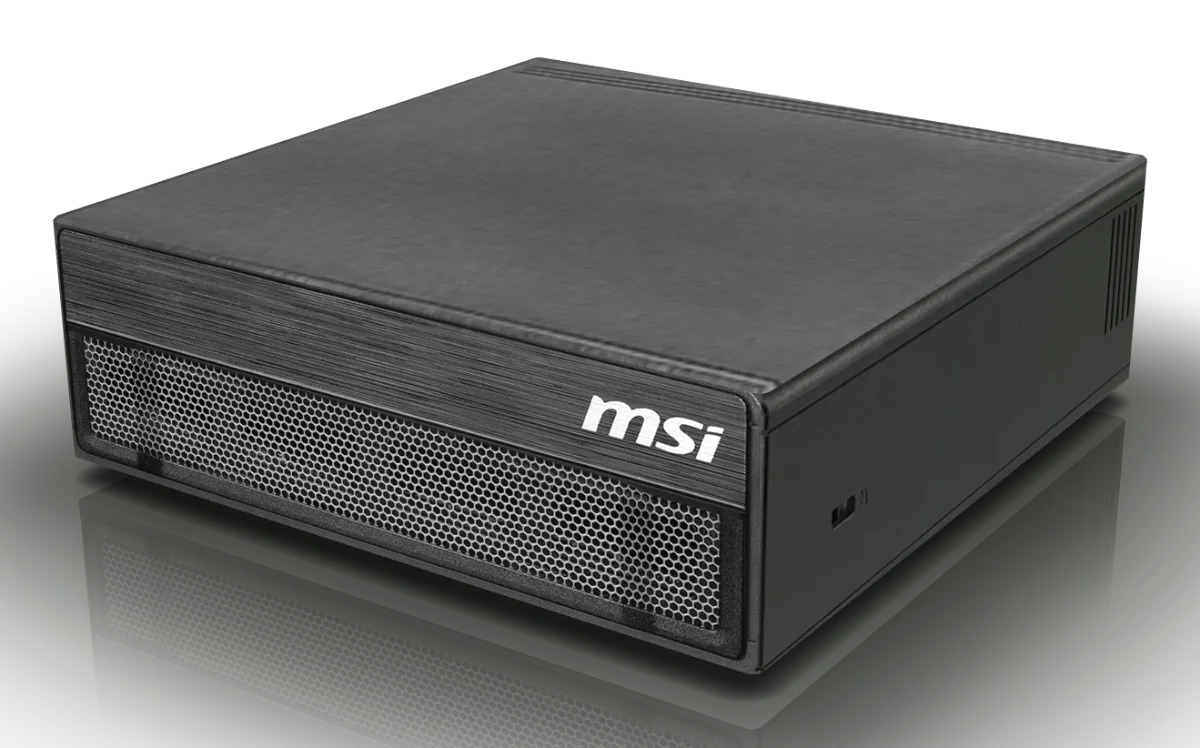
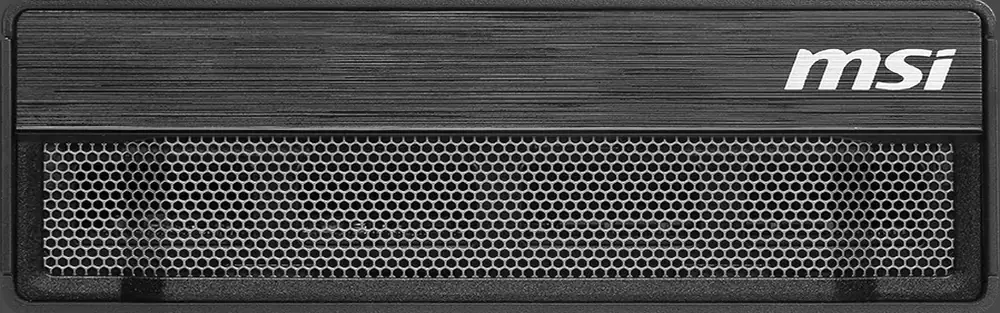
MSI changed the cooling more than any other maker: a FanDock airflow design, a vapour chamber over the SSD and raised feet so units can be stacked (MSI). MSI publishes its own thermal and throughput claims for the design. We have not tested them, found no independent review of them, and repeat none. StorageReview’s five-maker tests did not include an EdgeXpert.
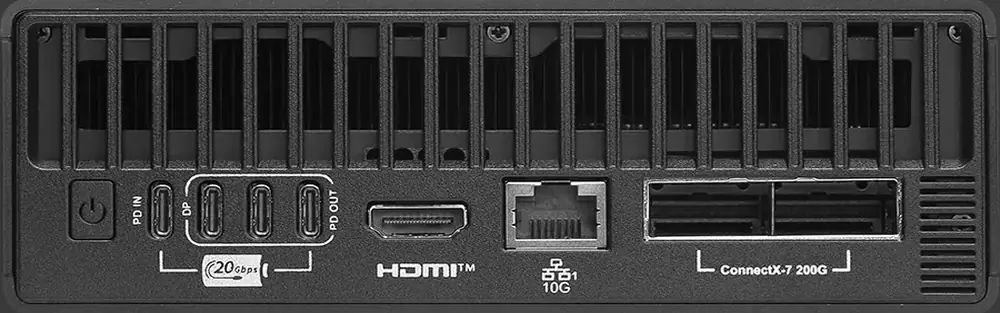
MSI is also the maker with the most specific cluster notes: three units in a ring with three QSFP cables, or four through a 200 GbE switch. Our two-node figures above show what linking two GB10 machines did for one model.
What differs on the EdgeXpert
Speed is not a reason to pick one GB10 badge over another. What separates the EdgeXpert, by MSI’s page:
- Storage: 1, 2 or 4 TB; MSI lists self-encryption on the 1 TB and 4 TB drives.
- Ports: four USB-C at up to 20 Gb/s and HDMI 2.1, with up to four DisplayPort outputs over USB-C.
- Size: 151 × 151 × 52 mm, slightly larger than the Founders Edition, at the same 1.2 kg. MSI’s page gives no adapter rating or warranty.
Every GB10 machine compared covers all eight makers.
Test a GB10 before you buy an MSI EdgeXpert
The benchmark that decides anything is your own model and your own prompts on the chip. GPUwerk rents a whole GB10 machine to one customer at a time for $0.79 an hour, billed per minute from prepaid credit. The machines we own are ThinkStation PGX and ASUS GX10 units, not MSI machines. A rental goes to whichever GB10 is free, and you cannot pick the maker, but the chip, memory and bandwidth are identical, so tokens per second and whether your model fits in 128 GB carry over. A rented machine will not tell you how loud the EdgeXpert is on your desk or how its ports suit you.
The run your own section has the vllm bench serve and llama-bench commands; the Qwen3-Coder sweep above took about 23 minutes of benchmark time. If you then want the machine itself, the EdgeXpert store page has the specs and EU price.
FAQ
How fast is the MSI EdgeXpert?
As fast as any GB10 machine, as far as published tests show. We found no review that benchmarked an EdgeXpert, but cross-maker tests put five other GB10 machines within 2.6% of each other. On the GB10 GPUwerk measured Qwen3-Coder 30B-A3B at 80.9 tok/s and Llama 3.3 70B at 6.0 tok/s for a single request (vLLM 0.27.1, AWQ 4-bit, 2 September 2026, on a ThinkStation PGX).
Does the MSI EdgeXpert run cooler than other GB10 machines?
We cannot say. MSI publishes its own thermal claims for its FanDock design, but we found no independent test that measured an EdgeXpert next to other GB10 machines. In StorageReview's tests of five other makers, the Acer Veriton GN100 ran coolest.
Why does my EdgeXpert power off on long prompts?
Petronella saw one of four EdgeXpert units, and two Founders Editions, power off at the start of 120,000 to 131,000-token prompts after a September 2026 firmware update. For the same symptom on the Founders Edition, NVIDIA staff suggest a lower GPU clock cap.
Can I test an MSI EdgeXpert before buying one?
You can test the same chip. GPUwerk rents a whole GB10 machine for $0.79 an hour, billed per minute. The machines we own are ThinkStation PGX and ASUS GX10 units, and a rental goes to whichever GB10 is free. Speed and memory fit carry over; noise and ports do not.